
Pillar guide: Documents and contract
Legga questo articolo in italiano.
Conditional preliminary contract for land in Italy
On this page
A conditional preliminary contract can make your purchase depend on a building permit or mortgage approval (Article 1353 of the Italian Civil Code). If the condition definitively fails without culpable obstruction or another valid basis for keeping the money, a payment without a legal basis is recoverable under Article 2033. Specify the event, deadline and handling of funds before signing.
In short
- A condition precedent ties the preliminary contract’s effects to a future, uncertain event, such as a building permit, a mortgage or the subdivision of the plot (Civil Code, Article 1353).
- A condition that depends on the mere will of the seller or of the party who must pay is void: «if the seller so wishes» does not work (Article 1355).
- If a party prevents the event it had an interest against, the condition counts as fulfilled; while waiting, both sides must act in good faith (Articles 1358 and 1359).
- Within one year of the agreed completion date and in every case within three years of recording the preliminary, the final deed, another instrument performing the preliminary, or the judicial claim under Article 2652(1)(2) must be recorded. Otherwise the preliminary recording loses its effects retrospectively (Article 2645-bis(3)). If the seller refuses, take legal advice before the deadline.
- If the condition definitively fails without culpable obstruction under Article 1359 and no other effective basis permits keeping the money, a payment without a legal basis is recoverable under Article 2033 even without a refund clause. Separately, write the refund amount, deadline and method into the contract to avoid disputes. Articles 1385 and 1386 cover default and withdrawal, not this case.
1 year
From the agreed completion date
Within both limits, record the final deed, another performing instrument or the Article 2652(1)(2) judicial claim.
3 years
From registering the preliminary
The outer limit, whatever date the contract states.
30 days
To register the preliminary
Done by the notary who drew up or certified the contract, according to the Notariato guide.
The report brings together public information about the land, with sources and dates, to prepare questions for the relevant offices: €29 in English or Italian · €39 in both languages · total, VAT included.
What a condition precedent is
The Italian Civil Code lets parties make a contract, or a single term of it, depend on a future and uncertain event (Article 1353). With a condition precedent (condizione sospensiva) the contract is signed but its effects wait until the event happens; with a condition subsequent (condizione risolutiva) it takes effect at once and falls away if the event happens. For land you want to buy only on certain terms you normally need the first: the preliminary contract, called the compromesso, binds you to sign the final deed only if the permit, the mortgage or the subdivision comes through.
Four rules of the Code apply to any condition:
- No conditions at the mere will of the seller or of the party who must pay. A transfer or an obligation subject to a condition precedent that depends on the mere will of the seller or of the debtor is void (Article 1355). «If the seller thinks fit» is not a condition.
- No impossible or unlawful conditions. An impossible condition precedent, or one contrary to mandatory rules, public order or morality, makes the contract void (Article 1354).
- Good faith while you wait. Whoever is bound under a condition precedent must act in good faith to keep the other party’s rights intact (Article 1358). If the condition fails because of the party with an interest against it, it counts as fulfilled (Article 1359).
- Retroactive effect. Once the condition is met, its effects go back to the day the contract was made, unless the parties or the nature of the deal point to another date (Article 1360). While waiting, the buyer may take steps to protect the right (Article 1356).
This guide deals with the condition only. The form of the preliminary contract, deposits and part-payments, the agent’s commission and the steps to the deed are covered in the guide to the preliminary contract and deposit.
- The event happens by the date (permit, mortgage, CDU, subdivision, pre-emption not exercised)Effects go back to the signing unless the parties or the nature of the deal point elsewhere: the final deed follows (Article 1360)
- The event does not happen by the dateNo culpable obstruction or other retention basis: payment without legal basis recoverable under Article 2033; agree refund timing
- The event fails because of the party with an interest against itThe condition counts as fulfilled (Article 1359)
- The condition depends on the mere will of the seller or of the party who must payThe condition is void, and the obligation with it (Article 1355)
Sources: Civil Code, Article 1353; Civil Code, Article 1355; Civil Code, Article 1358; Civil Code, Article 1359; Civil Code, Article 1360; Civil Code, Article 2033; accessed 13 November 2026.
Conditions that suit a land purchase
If your purchase depends on a permit or mortgage approval, define the result the authority or lender must issue. Here are five conditions that suit land; for each, write down the exact act, who applies for it and the date by which it must arrive.
Building permit. If you are buying to build, the condition can be the grant of a permesso di costruire for a described project (floor area, volume, use), to be applied for by a set date. Before signing, read what the plan and zone rules allow: the guide to what you can build under the PRG shows where to look.
Mortgage. The condition can be a mortgage of a stated amount approved by a set date. As with any condition, the wording decides: amount, term, lender or requirements, and date.
Zoning. The certificato di destinazione urbanistica (CDU), the comune’s zoning certificate, must be attached to the deed for land on pain of nullity, except for grounds of buildings on the urban cadastre under 5,000 m² (DPR 380/2001, Article 30, paragraph 2). The comune issues it within 30 days of the request, and it stays valid for one year if the plans do not change (paragraph 3). For the preliminary, the National Council of Notaries, in study 19-2007/C, advises attaching it so that the zoning rests on an official document from the comune. For building land the same study advises stating whether you can build directly or a detailed local plan must be approved first, and whether its agreement with the comune is already signed. More in the guide to the CDU.
Subdivision. If you are buying only part of a parcel, the condition can be approval of the subdivision (frazionamento) with the agreed measurements. How that works is in the guide to buying part of a plot.
Pre-emption right. If a neighbouring farmer or a farming tenant may have a right of first refusal (prelazione agraria), the Notaries' study suggests making the preliminary subject to the condition that the right is not exercised within the legal deadline, and signing the final deed afterwards. Who holds the right and how notice is served is in the guide to pre-emption on farmland.
Deadlines: tax registration and land registry recording
Give the condition a date, or the parties stay bound with no clear end. If the preliminary does not say when the final deed is to be signed and a deadline is needed, a court sets it when the parties cannot agree (Article 1183). The Notaries' study notes that a missing deadline does not invalidate the preliminary, but it is wise to state one.
Land registry recording (trascrizione) is distinct from tax registration (registrazione). A conditional preliminary can be recorded if made by notarial deed or with signatures certified or judicially verified (Article 2645-bis(1)). Within one year of the agreed completion date and in every case within three years of recording the preliminary, the final deed, another instrument performing the preliminary, or the judicial claim under Article 2652(1)(2) must be recorded. Otherwise the preliminary recording loses its effects retrospectively (Article 2645-bis(3)). If the seller refuses, take legal advice before the deadline. The special privilege for claims following non-performance has timing conditions and exclusions for specified mortgage creditors under Article 2775-bis. Ask the notary to assess it; it does not promise priority over every mortgage.
Tax registration and land registry recording are separate steps. Registration with the Agenzia delle Entrate must be requested within 30 days of the date of an instrument made in Italy (Article 13 DPR 131/1986). According to the Notaries' guide updated in March 2023, the notary who drew up or certified the preliminary records it at the land registry within 30 days of signing. Protection against third parties runs from that recording, not from the signature.
From conditional preliminary to final deed: the deadlines
- Before signingCDU requested from the comune: issued within 30 days, valid one year if the plan does not change
- SigningPreliminary with certified signatures or as a notarial deed, if it is to be registered
- Within 30 daysThe notary requests tax registration with the Agenzia delle Entrate (Article 13 DPR 131/1986) and, separately, land registry recording; protection against third parties starts from recording
- Condition deadlineThe date written in the contract, before the deed date
- Condition metWithin 30 days the parties report the event to the tax office that registered the instrument, with self-assessment and payment of any tax due (Article 19 DPR 131/1986)
- Final deedWithin one year of the agreed date and in any case three years of recording the preliminary: record final deed, another performing instrument or Article 2652(1)(2) claim
Sources: Civil Code, Article 2645-bis; DPR 380/2001, Article 30; DPR 131/1986, Article 13; DPR 131/1986, Article 19; National Council of Notaries, guide «Garanzia preliminare» (March 2023); accessed 13 November 2026.
If the condition fails: deposit and conduct
If the event does not happen by the date, the obligation to sign the final deed never arises. For the deposit the Code has two rules written for other situations. With a confirmatory deposit (caparra confirmatoria), if the party who paid it defaults, the other may withdraw and keep it; if the party who received it defaults, the other may withdraw and claim double (Article 1385). With a caparra penitenziale, an agreed payment linked to a contractual withdrawal right, the contract gives a right to withdraw and the deposit is simply its price (Article 1386). If the condition definitively fails without culpable obstruction under Article 1359 and no other effective basis permits retention, a payment without a legal basis is recoverable under Article 2033. State the refund amount, deadline and method in the contract; omitting a refund clause does not remove the statutory restitution right.
The waiting period has its own rules. The seller must act in good faith to protect the buyer’s rights (Article 1358): granting a mortgage on the land while the permit is pending, for example, can harm them. If the subdivision does not come through because the seller fails to sign the application he undertook to file, the condition counts as fulfilled (Article 1359). The buyer has duties too: if the condition is the mortgage and you never apply to a bank, the same rule may apply to you.
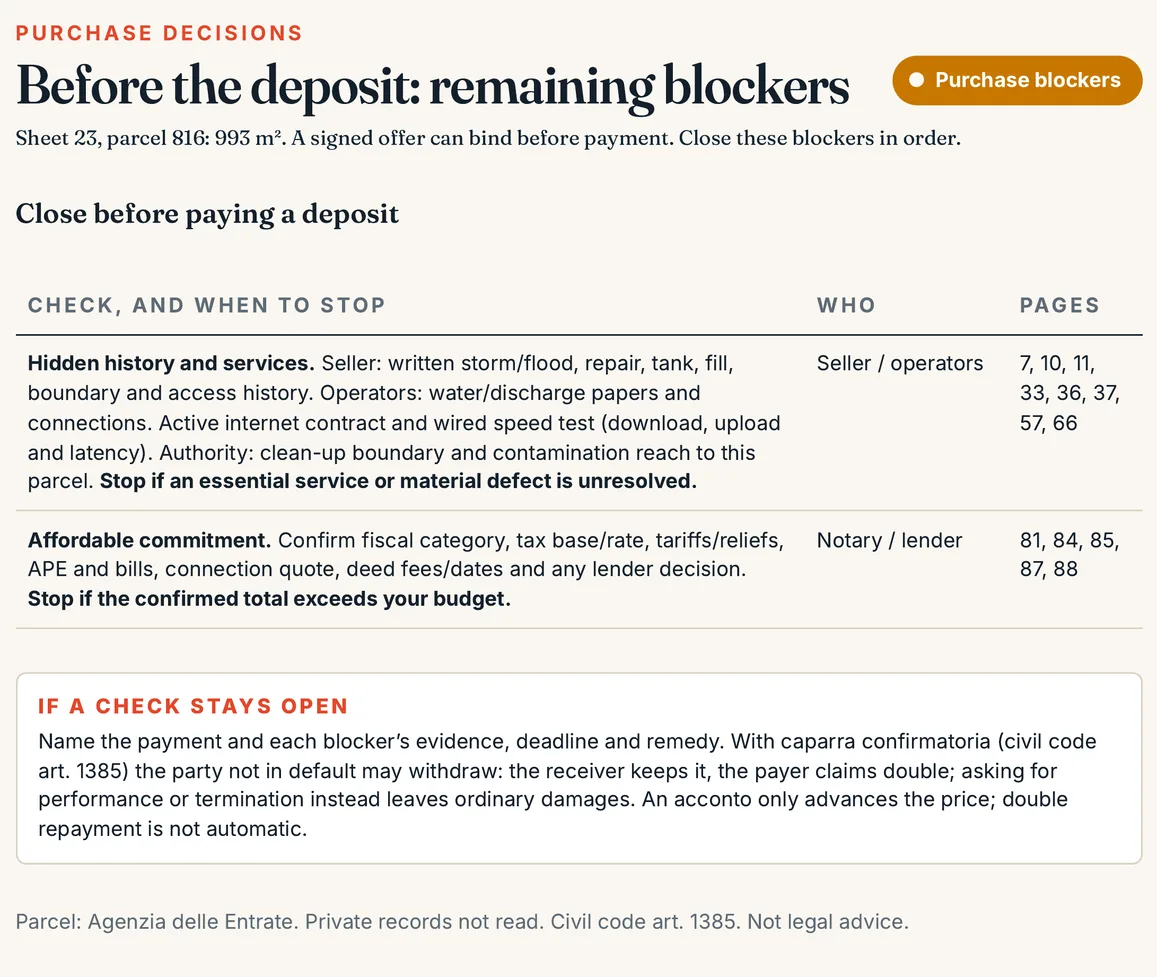
Common mistakes in the clause
- A condition left to one party’s will. «If the buyer decides to proceed» or «unless the seller changes his mind» run into Article 1355. Tie the condition to an act by a third party: the comune, a bank, the Agenzia delle Entrate, the holder of the pre-emption right.
- A vague event. «If the land turns out to be buildable» leaves open what counts: the CDU, the permit, an adopted plan. Name the document and what it must say.
- No date, or a date outside the registration window. Set the condition’s deadline before the deed date, and the deed within the limits of Article 2645-bis.
- Nobody in charge of the steps. State who applies for the permit, mortgage or subdivision, by when, and who pays the surveyors and fees.
- No rule on the deposit if the condition fails. In the cases described above, repayment rests on Article 2033 even without a clause; still state the amount, timing and method of repayment to avoid disputes.
- No choice if the event happens only in part. If the permit allows less volume, or the bank lends less, the clause should say whether the buyer may still buy.
Before you sign: steps, timing and places
- Before the offer, at the comune. Ask the planning office for the parcel’s CDU: it is issued within 30 days. Ask for the plan’s zone rules at the same time.
- Before the offer, at the Agenzia delle Entrate. Run a mortgage and charges search on the seller and the land: the guide to the mortgage search explains how.
- Before signing, with the notary. Agree the condition, the date, who does each step and what happens to the deposit. If you want to register the contract, you need a notarial deed or certified signatures.
- Within 30 days of signing, by the notary. Tax registration with the Agenzia delle Entrate (Article 13 DPR 131/1986) and, as a separate step, recording of the preliminary at the land registry.
- While you wait. Diary the condition’s deadline and the Article 2645-bis deadline. Ask in writing for updates on the permit, mortgage or subdivision application.
- After fulfilment, at the tax office that registered the instrument. Within 30 days the parties report the event, with self-assessment and payment of any tax due (Article 19).
- Before the deed, at the comune. Check that the CDU is still valid: issued less than a year ago, with no change to the plan.
| Event | Evidence and responsibility to agree | Date to specify | Partial approval | Funds |
|---|---|---|---|---|
| Building permit | Decision and drawings; identify the SUE applicant | Application and decision deadlines | Minimum acceptable floor area | Custody and refund arrangements |
| Mortgage | Written lender approval; buyer applies | Consistent with the lender’s stated process | Minimum loan amount | Distinguish deposit from advance |
| Subdivision | Approved survey; named technician | Delivery before completion | Minimum agreed area | Allocate survey fees |
| Pre-emption | Notices and outcome; seller arranges | Statutory deadline checked by notary | An informal assurance is insufficient | Agree refunds and expenses |
Conditional preliminary contract for land in Italy
https://terrenocheck.it/en/guide/conditional-preliminary-contract-land-italy
Checklist
Before you sign a conditional preliminary contract
Common questions
Is «subject to mortgage approval» enough on its own?
It is better than nothing, but it leaves the key points open: what amount, from which bank or on what terms, by what date, who must apply and what happens to the deposit. A vague condition invites disputes about whether it has been met or has failed.
Can the seller back out while we wait for the building permit?
No. While the condition is pending, whoever has bound themselves must act in good faith to protect the other party’s rights (Civil Code, Article 1358). If the condition fails because of the party with an interest against it, it counts as fulfilled (Article 1359).
If the condition fails, do I get the deposit back?
If the condition definitively fails without culpable obstruction under Article 1359 and no other effective basis permits retention, a payment without a legal basis is recoverable under Article 2033. State the refund amount, deadline and method in the contract; omitting a refund clause does not remove the statutory restitution right.
Do I need the zoning certificate (CDU) for the preliminary contract?
DPR 380/2001 requires it, on pain of nullity, for deeds transferring rights in land, that is for the final deed (Article 30, paragraph 2). For the preliminary, the National Council of Notaries advises attaching it, because it shows the zoning in an official document from the comune.
How long can the condition last?
As long as the parties agree. If the preliminary has been recorded at the land registry, however, the final deed, another instrument performing the preliminary or the judicial claim under Article 2652(1)(2) must be recorded within one year of the agreed completion date and in any case within three years of recording the preliminary; otherwise the recording loses its effects retrospectively (Article 2645-bis, paragraph 3). The condition’s deadline should fall before that. If the seller refuses to complete, take legal advice before the deadline runs out.
Does a conditional preliminary contract need a notary?
It must be in writing, because the final sale of property must be (Civil Code, Articles 1350 and 1351). To register it you need a notarial deed or a private agreement with signatures certified by a notary or verified by a court (Article 2645-bis, paragraph 1).
Keep reading
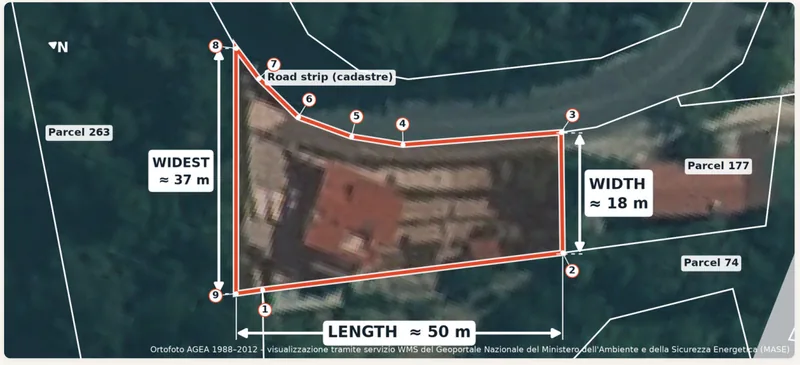
Preliminary contract and deposit in Italy
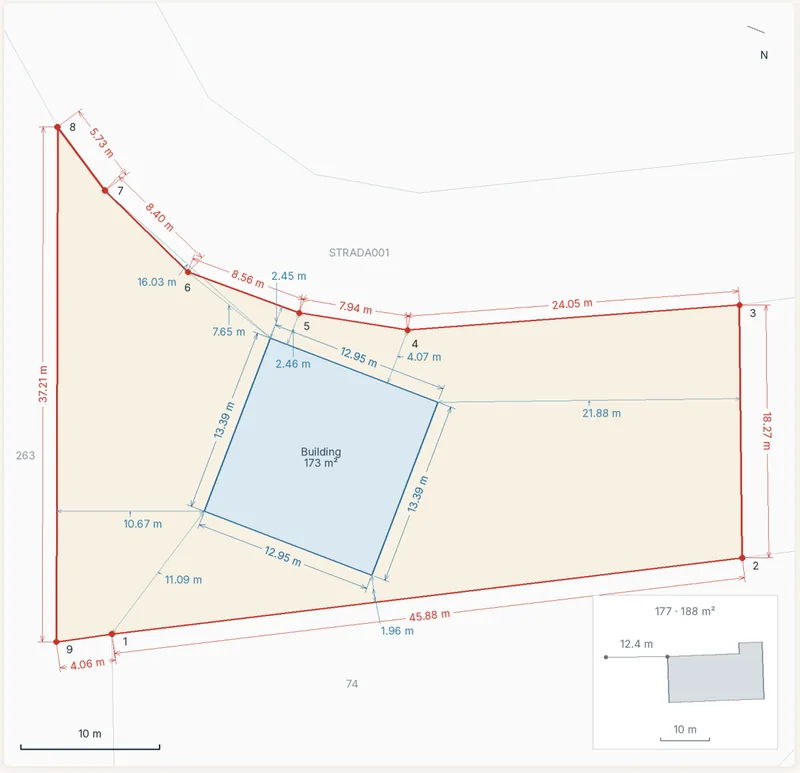
Can you build on land in Italy? PRG, PUC and zoning
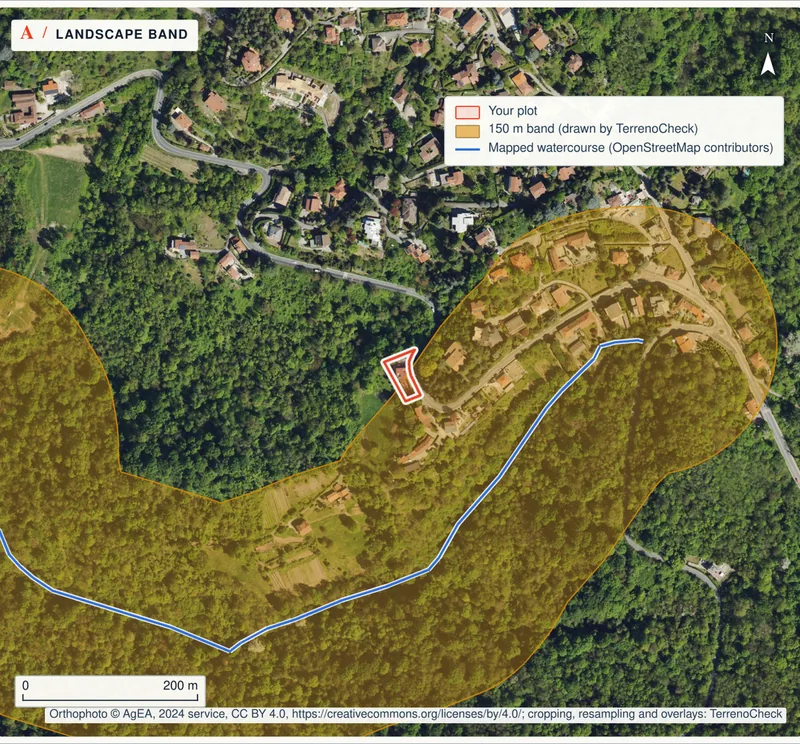
The certificato di destinazione urbanistica (CDU): Italy’s zoning certificate, explained for foreign buyers
Buying agricultural land in Italy: pre-emption rights
Know what the plan allows before you tie a deposit to a permit
Pick the parcel on the map: the comune’s plan, constraints, risks and cadastral data are read for that plot, each with a source and date, together with the checks to close before you pay a deposit.
€29 in English or Italian · €39 in both languages · total, VAT included