
Mortgages, liens and seizures on Italian land
A clean cadastral extract is not a clean title. This guide shows a buyer how to read Italy's property registers, find mortgages, seizures and lawsuits, and price the professional work before committing money.
Contents
- Start with the right office and the right search
- How to read a nota di trascrizione and a nota di iscrizione
- Mortgages: voluntary, judicial and legal
- Pignoramento: do not buy privately from a debtor
- Sequestro conservativo and a transcribed lawsuit
- Fondo patrimoniale and other vincoli
- How a mortgage is cancelled, and why the register can lag
- How far back should the search go?
- What the searches cost, and who normally pays
- A buyer's order of operations
Ownership and registered burdens must be checked in the property registers, not inferred from the cadastral extract or the seller’s account. An ipoteca giudiziale, pignoramento or old mortgage entry needs documentary resolution before the deed.
That is not a paperwork curiosity. A registered burden can affect the price, the timing of the deed, your lender and, in some cases, whether the seller can give you what you think you are buying. The register is where you find the problem, not where a buyer solves it.
This buyer guide does not provide legal, notarial or financial advice. TerrenoCheck does not verify ownership, title or the absence of liens. Have the notary obtain and interpret the current registers, and use a lawyer where a lawsuit, enforcement proceeding, family fund or disputed title appears.
The Italian land-buying checklist is a useful first pass; this guide deals with the register risks that can stop the purchase after the parcel has already caught your eye.
Start with the right office and the right search
The office many people still call the Conservatoria is now the Servizio di Pubblicità Immobiliare of the Agenzia delle Entrate, within the provincial Ufficio Provinciale - Territorio. Unlike the Catasto, it records acts and legal events made public against immovable property.
The Agenzia's ispezione ipotecaria guide says the service consults registers, notes and deposited titles. Search by property and seller, then add previous owners and every parcel in access, division, inheritance or boundary documents. A name-only or parcel-only result can miss the chain you need.
The returned list is an index of formalità, not a clean-title certificate. It can show:
- a nota di trascrizione, usually for a transfer, real right, succession, division, pignoramento or other public event;
- a nota di iscrizione, used for the constitution of an ipoteca;
- an annotamento, which updates or refers to an earlier transcription, inscription or annotation, such as cancellation or a correction.
Ask for the underlying titolo where it is available. “Cancellazione totale” is useful only if it refers to the exact mortgage inscription, property and quota in your transaction.
Pages from the delivered dossier
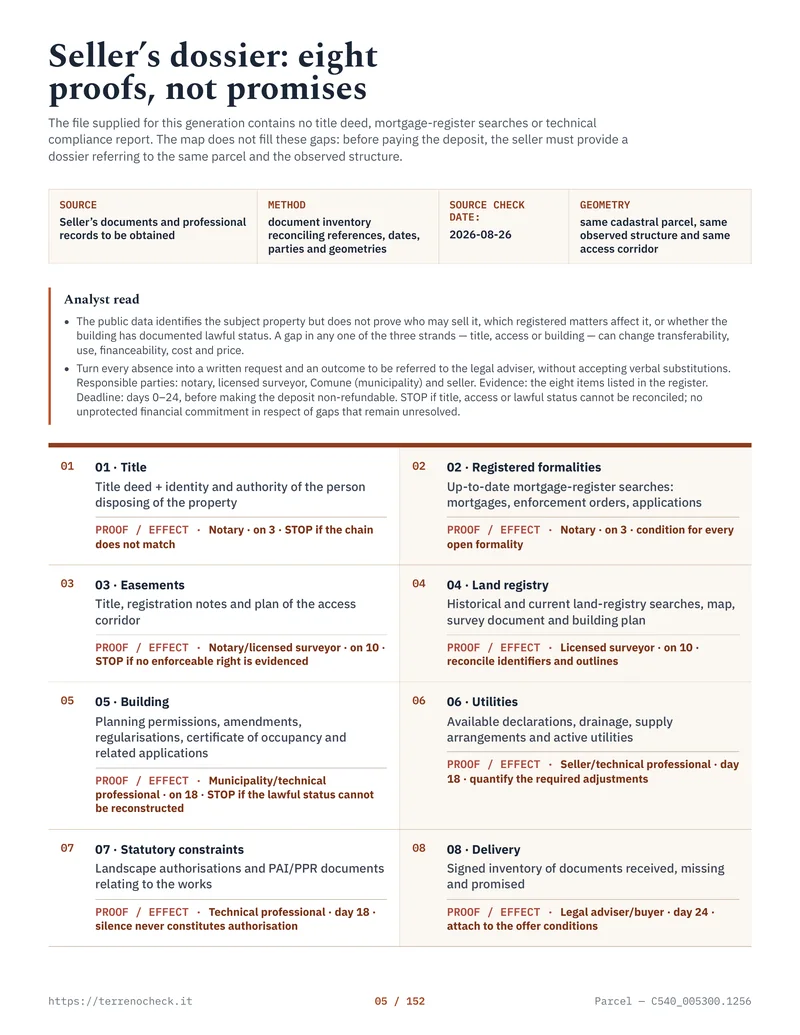 Open the full page
How to read a nota di trascrizione and a nota di iscrizione
The nota di trascrizione is the filing that makes an act or event visible in the register. Under Article 2659 of the Civil Code, as replaced by Law 52/1985, it identifies the parties, the title and date, the public official or court, and the property details. On the screen, pay attention to a favore and contro. In a sale they are broadly buyer and seller; in a mortgage they are creditor and debtor; in an enforcement filing, the labels describe the procedural parties.
Do not treat those labels as a conclusion about ownership. Compare the foglio, particella, subaltern, share and rights with the deed. A wrong parcel number can make a dramatic-looking search irrelevant, while a small share can matter very much.
The nota di iscrizione records an ipoteca. It should let the professional identify the creditor, debtor, legal basis, amount secured, interest and costs where stated, date, degree and the property or properties affected. “Mortgage amount” is not necessarily the balance still owed. It is the registered security amount, often larger than the original loan because it covers interest and expenses. Ask the notary or lender for the payoff figure instead of doing arithmetic from the note.
An annotamento is a later entry tied to an earlier formalità. It may record a total or partial cancellation, reduction, transfer of credit, subrogation, rectification or the outcome of a procedural event. A search that shows a mortgage followed by no annotation deserves an explanation. An annotation with the wrong formalità number, or an annotation concerning one fraction of a divided mortgage, deserves one too.
The three terms describe different register operations. None, read in isolation, tells a foreign buyer that the transaction is safe.
| Register action | What it records | Useful legal references | Buyer question |
|---|---|---|---|
| Trascrizione | Transfer, real right, succession, division, pignoramento or other event made public | Civil Code Articles 2643, 2659; Law 52/1985 Article 1 | What title or court event is this, and does it concern the exact parcel? |
| Iscrizione | Mortgage constitution | Civil Code Articles 2808, 2817, 2818, 2821 | Who is creditor, what degree and amount are registered, and was it cancelled? |
| Annotamento | Later change to an earlier formalità, including cancellation | Civil Code Articles 2656, 2882–2884; TUB Article 40-bis for qualifying loans | Which earlier note or inscription does it update, and is the whole burden covered? |
Source: Agenzia delle Entrate, L’acquisto della casa; Civil Code and Law 52/1985 and Normattiva · consolidated legislation.
The cadastral extract guide explains the other half of this comparison. Use it to match identifiers, not as a replacement for the ispezione ipotecaria.
Mortgages: voluntary, judicial and legal
An ipoteca is a real security right over an immovable. The owner can sell the property, but the mortgage does not disappear because the buyer's name changes. The creditor's priority and enforcement rights are why the notary normally requires the old security to be paid and cancelled, or arranges a documented simultaneous mechanism at the deed.
An ipoteca volontaria is created with the owner's consent, commonly to secure a bank mortgage. Civil Code Article 2821 concerns its constitution. Check the current creditor, the loan's extinction and the exact cancellation path.
An ipoteca giudiziale is registered on the basis of a judgment or another judicial title under Civil Code Article 2818. It can arise from a dispute or unpaid debt. “The case is finished” is not enough: obtain the judgment, payment evidence and the annotation which changes the register.
An ipoteca legale exists in cases provided by Civil Code Article 2817, including statutory protection for a seller's unpaid obligations in a sale. It is still an iscrizione.
Civil Code Article 2847 gives an inscription twenty years of effect from its date unless it is renewed before the period expires. Renewal preserves priority; an old inscription can therefore be followed by a new rinnovazione. A mortgage older than twenty years without renewal may have lost the effect of its inscription, but that fact alone is not proof that the debt was paid or that the register was properly updated. Ask for the complete sequence and let the notary decide what can be ignored.
- Active inscription, within 20 yearsTreat as live security; identify creditor, amount, degree and agreed cancellation
- Older than 20 years, no visible renewalCheck Civil Code Article 2847, debt status and any later annotation; age is not proof of payment
- Payment claimed, no cancellation annotationObtain the lender's quietanza and communication or a notarial cancellation route before relying on a clean deed
- Judicial or legal mortgageIdentify the title and creditor; ordinary bank payoff language may not solve it
Source: Civil Code Articles 2817, 2818, 2821 and 2847; Agenzia delle Entrate, L’acquisto della casa.
Pignoramento: do not buy privately from a debtor
The pignoramento immobiliare is the attachment that begins or supports forced enforcement against an immovable. It is made public by transcription, not by mortgage inscription. Article 555 of the Code of Civil Procedure sets out the mechanism for real-estate seizure.
If a seller has a pignoramento already transcribed, a normal private sale is not a way around the creditor. Civil Code Article 2914 protects the executing creditor and intervening creditors against later transfers, subject to procedural rules. A signed deed and payment do not give you the certainty of a court-managed transfer. Do not hand over a deposit because the seller promises to “settle the bank next week”.
There is a different transaction: buying in the judicial procedure, through the court's sale process or another court-authorised route. The Ministry of Justice describes an ordinanza di vendita, expert report, custodian and judge's transfer decree. On payment, the decreto di trasferimento transfers the property and the court handles registration and cancellation of the pignoramenti and mortgages covered by Article 586 of the Code of Civil Procedure. Read the notice, appraisal, occupancy information, building records, taxes and conditions. A judicial sale is not a normal seller warranty package.
For a buyer who is not deliberately buying through enforcement, the decision is simple: stop the ordinary purchase until the court, creditor and notary have supplied a written route to release. The notary's role in an Italian purchase matters here, but a notary cannot turn an unresolved seizure into a clean title by wording alone.
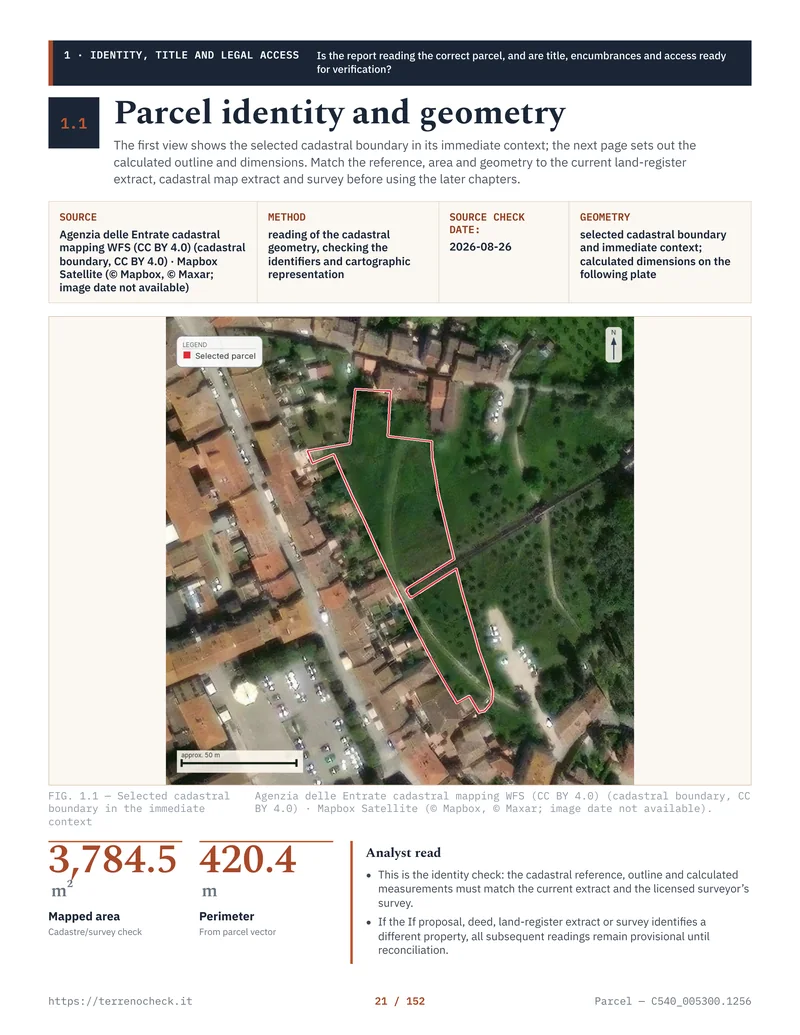 Open the full page
Sequestro conservativo and a transcribed lawsuit
A sequestro conservativo is a precautionary measure used to preserve assets for a creditor's claim. Civil Code Article 2905 and Code of Civil Procedure Article 671 govern the basic framework. When the measure is transcribed against land, a later buyer cannot treat the sale as if the register did not exist. The measure is not the same as a final judgment and it does not tell you, by itself, that the creditor will win. It does tell you that a court has allowed a protective step against the property or debtor's assets.
A domanda giudiziale trascritta is a lawsuit application made public in the property register where the law permits or requires it. Civil Code Articles 2652, 2653 and 2690 contain the relevant categories and priority effects. The practical reason it survives a sale is timing: the registered lawsuit gives third parties notice and preserves the claimant's ability, in the cases covered by those articles, to make the later judgment effective against rights acquired after the transcription. A later deed does not erase the earlier public claim.
This is not a rule that every lawsuit follows every property. The claim, its legal basis, the challenged deed, buyer good faith and priority all matter. Ask for the full filing, court, parties, relief sought and procedural status. “It is only a family dispute” has no evidential value.
The preliminary contract guide covers why timing and transcription matter before the final deed. For a buyer with a signed preliminare, a notarial transcription can protect against later dealings, but it does not cure a pre-existing mortgage, seizure or lawsuit.
Fondo patrimoniale and other vincoli
A fondo patrimoniale is a family-property arrangement under Civil Code Articles 167–171. Spouses, and in some cases a third party or will, place identified assets in a fund for the family's needs. The constitutive act is itself a title event to read. Article 169 can restrict alienation or encumbrance, subject to the act and the required consents; where minor children are involved, judicial authorisation may be required. The notary must check the family-status facts and the constitutive instrument, not just the seller's signature.
Article 170 also limits enforcement against fund assets for debts that the creditor knew were unrelated to family needs. That is a creditor issue, not a promise that a fund asset is immune. If the search shows a fondo patrimoniale, obtain the deed, marriage and child-status information relevant to the transaction, and a written explanation from the notary of the permitted sale route.
“Vincolo” is a broad word, not a single register result. It can describe a private real burden, usufruct, easement, family fund, public restriction or protected-area constraint. Some restrictions are made public in the real-estate registers; others sit in a municipal plan, regional register or administrative file. A clean ispezione ipotecaria does not prove that a parcel is free from every public-law restriction. Check the CDU, applicable plan and any civic-use or public-domain record separately.
How a mortgage is cancelled, and why the register can lag
The so-called Bersani procedure began with Article 13 of D.L. 31 January 2007, no. 7, converted by Law 2 April 2007, no. 40. Its simplified cancellation rules were made operational for qualifying mortgages securing loans from banks and financial intermediaries, the scope drawn by Article 40-bis(6). The current consolidated banking rule is Article 40-bis of D.Lgs. 385/1993.
The sequence is easy to misunderstand. Under Article 40-bis(2) of D.Lgs. 385/1993, once the secured obligation is extinguished the creditor issues a quietanza stating the extinction date and sends the required communication to the conservatore within thirty days. If there is no justified obstacle communication of the kind subsection 3 provides for, the conservatore proceeds officially with cancellation by the next day after the waiting point set by subsection 4. The process does not require a notarial authentication for the communication, which subsection 5 states. The seller still needs the property register to show the result when your deed is prepared.
This is why a paid mortgage can remain visible. Repayment extinguishes the debt; it does not make every historical search screen rewrite itself at the moment the last instalment clears. Older loans may have been handled under another procedure. A bank may have merged, closed or failed to match a communication to the formalità. A fractioned mortgage may have been released for one unit while another quota remains. A creditor may have raised an obstacle. None of those possibilities can be selected from the word “paid”.
The practical file is the original inscription number, lender's quietanza, communication or proof of transmission, relevant partial releases, and a fresh ispezione ipotecaria. If the simplified route does not apply, the notary may need lender consent and formal annotation. A private email is not final register evidence.
- Mortgage inscriptionCivil Code Article 2847: inscription effective for 20 years unless renewed
- Loan obligation extinguishedTUB Article 40-bis: creditor issues the quietanza and communicates to the conservatore within 30 days
- No justified obstacle communicationthe conservatore proceeds officially with cancellation by the day after the statutory waiting point
- Fresh searchbuyer checks the exact inscription and annotation before the deed
Source: TUB Article 40-bis; D.L. 7/2007 Article 13; Civil Code Article 2847.
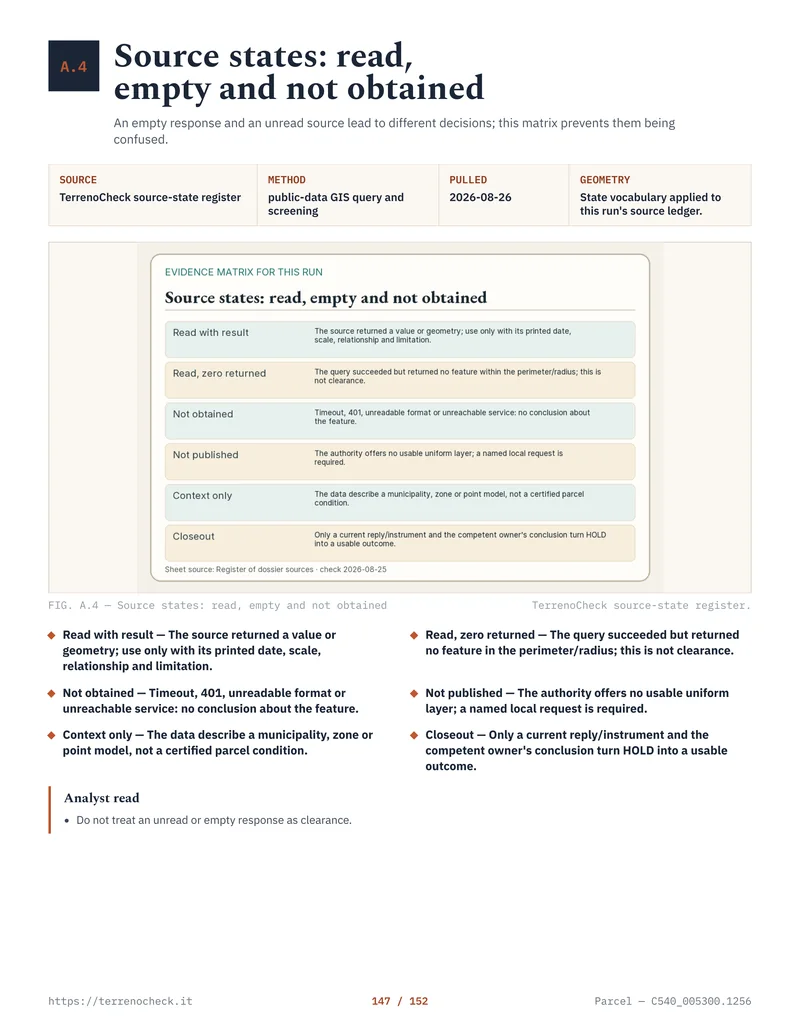 Open the full page
How far back should the search go?
Twenty years is a useful alert number, not a universal safe depth. It appears in two different places buyers often mix up: Civil Code Article 2847 governs the duration of a mortgage inscription without renewal, while Civil Code Article 1158 states the ordinary twenty-year period for acquiring ownership of immovables by usucapione.
Neither rule says that every buyer can search exactly twenty years and stop. A mortgage may be old and still need a cancellation explanation. A prior deed, inheritance, division, donation or family arrangement may be older than twenty years and still be necessary to understand the seller's title. A claim of usucapione needs evidence of possession, legal requirements and often a judgment or properly documented settlement; twenty years of a neighbour's story is not a title report.
The search depth should follow the risk. For rural land, inheritance, a boundary dispute or repeated parcel splits, ask for earlier deeds and maps. The inheritance records guide and boundary-dispute guide cover two common reasons a seller's title history grows long.
The same number appears in two legal rules, but neither one is a universal buyer-search limit.
| Twenty-year reference | Published rule | Buyer use | Limit |
|---|---|---|---|
| Mortgage inscription | 20 years, Civil Code Article 2847, unless renewed | Flag old inscriptions and check renewal or cancellation | Does not prove the debt was paid |
| Usucapione of immovables | 20 years, Civil Code Article 1158 | Ask whether a title chain depends on adverse possession | Does not turn use, occupation or a neighbour's statement into ownership |
| Search scope | No single Civil Code rule says every purchase search stops at 20 years | Set depth from the title history and risk | Old deeds, inheritances, divisions and restrictions may still matter |
Source: Civil Code Articles 1158 and 2847.
What the searches cost, and who normally pays
The table of charges for mortgage and cadastral services is annexed to D.Lgs. 347/1990 and made payable by its Article 19. The version published by the Agenzia lists a €7 search by person or property, including the first 30 formalities or fraction of 30, and €3.50 for each further group of 15 formalities or fraction. The table notes a reduction for telematic consultation where applicable. It also lists €4 for each note viewed, €4 for a note printed, €8 for a title printed, €0.15 for an unproductive direct-access attempt, €20 for a national subject search, €30 for a certificate concerning one person plus €2 per note examined, and €10 for a copy request. Confirm the current charge and delivery method before ordering; the tariff document is not a quote for a notary's work.
Those are the public charges. A professional may add time for identity matching, older paper registers, title retrieval, translation, a written report and comparison of multiple parcels. There is no honest national price for that work. A chain involving six heirs, two mortgage fractions and a court annotation is a different assignment.
The buyer normally pays for the searches and professional review commissioned for the buyer's protection, unless the preliminary contract or closing arrangement says otherwise. The seller normally supplies the title documents and must cooperate in clearing a burden that prevents the promised transfer, but “seller pays” is not a substitute for putting the steps, deadline and proof into the contract. In a judicial sale, follow the notice: taxes, registration costs, custody, transfer and cancellation arrangements are set by the procedure and are not the same as a private conveyance.
Source: Agenzia delle Entrate, TABELLA DELLE TASSE IPOTECARIE D.Lgs. 31-10-1990 n. 347. The table also states the conditions for telematic reductions and additional certificate-note charges.
A buyer's order of operations
Before signing an offer or paying a serious deposit, give the notary the exact cadastral identifiers and seller's full legal name. Ask for a current ispezione ipotecaria by property and subject, the acquisition title, earlier titles where needed, and copies of every mortgage, pignoramento, sequestration, lawsuit, fund or cancellation annotation.
Then separate three questions. Is the seller entitled to convey the right being sold? Is the property burdened by a security or procedure that can affect you? Is the burden removable before, at or only after the deed? The first is title work. The second is register work. The third is transaction engineering. A cheap search answers none of the three on its own.
Make the preliminary contract match the answer. Identify the parcel and share. State which burdens the seller must clear, who orders each document, the deadline, the payment destination and what happens to the deposit if cancellation or court release does not arrive. A “free from liens” phrase with no document and no date is thin protection.
Finally, repeat the search close to signing. A new debt, mortgage, pignoramento or court filing can appear after the first search.
Sources
- Agenzia delle Entrate, L'acquisto della casa: the ispezione ipotecaria and property registers
- Agenzia delle Entrate, Table of mortgage taxes and inspection charges
- Normattiva, Civil Code, R.D. 16 March 1942, no. 262
- Normattiva, D.L. 31 January 2007, no. 7, Article 13, converted by Law 2 April 2007, no. 40
- Normattiva, Consolidated Banking Act, Article 40-bis
- Agenzia del Territorio, Circular no. 11/2007 on simplified mortgage cancellation
- Ministero della Giustizia, Judicial sales and enforcement proceedings
- Normattiva, Law 27 February 1985, no. 52, Article 1 on the nota di trascrizione
- Normattiva, Code of Civil Procedure, Article 555
- Normattiva, D.Lgs. 1 September 1993 no. 385, Article 40-bis(2)-(6), cancellation of mortgages
- Normattiva, D.Lgs. 31 October 1990 no. 347, Article 19 and the table of charges for mortgage and cadastral services